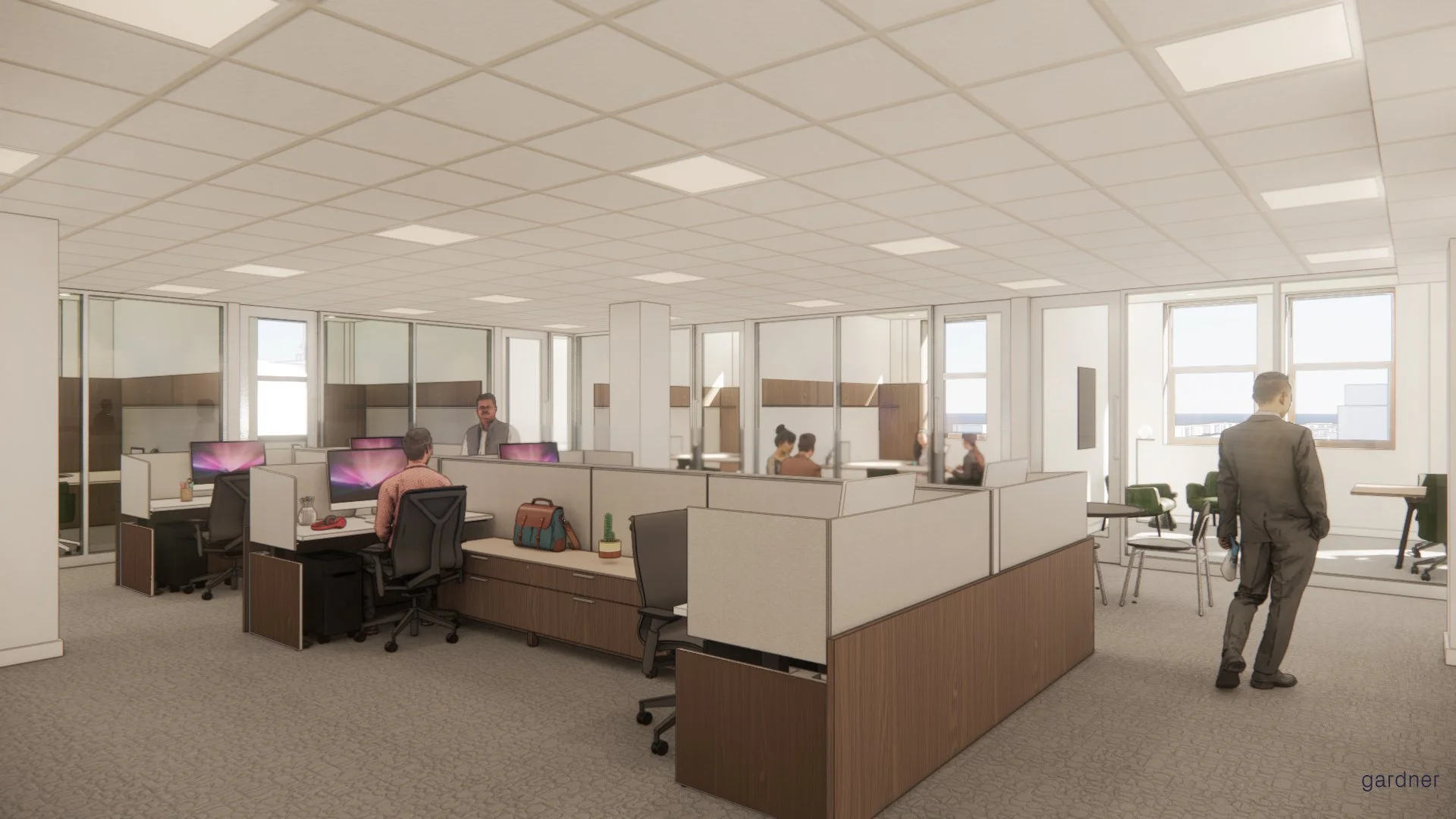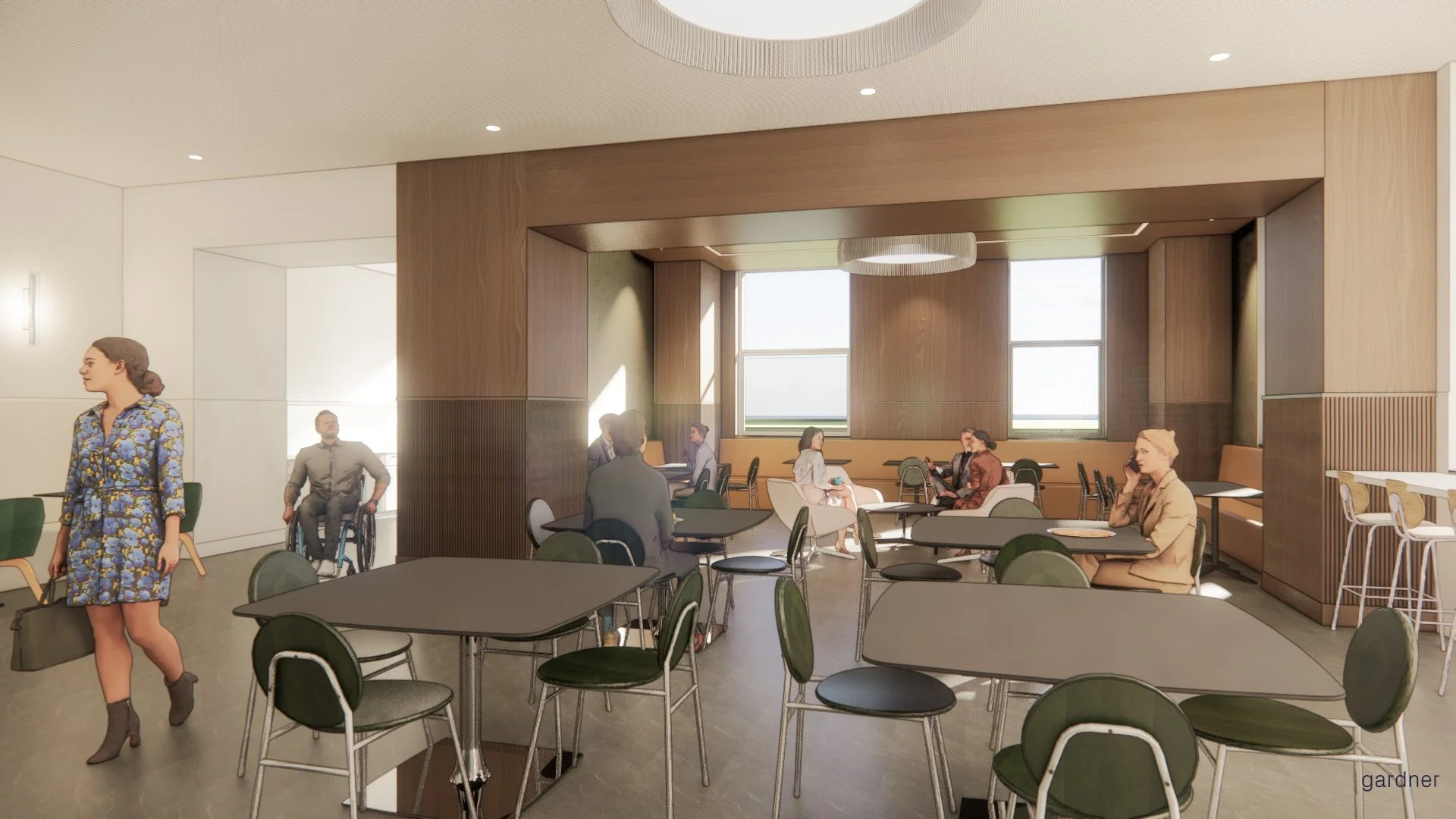
Jim Thorpe Memorial Building Renovation
Strategic Preconstruction Leadership Delivers $15M in Savings on a $60M Design-Build Project
At a Glance
The Jim Thorpe Memorial Building renovation brings visionary leadership and collaborative strategy to the revitalization of a nearly 100-year-old Oklahoma City landmark. Through meticulous coordination and innovative problem-solving, the project team is preserving historic character while delivering major cost savings and modern performance.
QUAD Construction
Repositioning a 45-year construction management firm for its next chapter

Firm Context
When Heather Gardner joined Smith & Pickel Construction in March 2021, the firm carried a substantial Oklahoma construction legacy but faced an urgent positioning problem.
For decades, Smith & Pickel had been closely associated with one private client and the development of the Chesapeake Energy campus. When that relationship ended, followed by a quiet ownership transition and the disruption of COVID-19, the firm was left with a strong project history but little public understanding of who now led it, which markets it served, or what its next chapter would be.
The office team had contracted to three project managers, supported by experienced superintendents in the field. Technology and documented systems were limited. The new owner, Matt Thomas, brought deep operational capability, but the firm needed an external business engine: someone to rebuild the pipeline, translate legacy into current market credibility, and connect business development, preconstruction, marketing, and operations.
That became Heather's mandate.
The Strategic Challenge
The work was larger than a rebrand and more urgent than a marketing campaign. The firm needed to reduce the risk of single-client dependency, enter sectors with different qualification and compliance expectations, establish repeatable pursuit and preconstruction processes, and make a largely unknown ownership transition visible and credible.
The central question was not simply how to win the next project. It was how to rebuild the operating conditions that would allow a lean construction management firm to compete consistently.
Heather's Leadership
1. Diversifying the market position
Heather shifted the firm's business-development focus toward public, institutional, education, and tribal opportunities. Relationship development and pursuit strategy expanded to organizations including the University of Oklahoma, Oklahoma State University, Langston University, OMES, public school districts, and tribal nations.
These sectors became more than a short-term response to a disrupted private market. They demonstrated that the firm's experience and field leadership could translate beyond its historic client base.
2. Building pursuit infrastructure
Heather created RFQ and RFP templates, qualification packages, case-study formats, project statistics, and repeatable proposal workflows. The firm's 45-year history was reorganized as evidence of institutional knowledge and delivery capability rather than allowed to read as dependence on a single legacy client.
The pursuit system gave a small team the structure to respond with greater consistency and positioned business development as an operating function connected to project delivery.
3. Connecting business development to preconstruction
Heather integrated pursuit strategy with estimating, project handoff, and field operations. Qualification commitments, owner priorities, design decisions, risk, and scope could be carried forward instead of being rediscovered after award.
She also developed the comprehensive internal preconstruction operating framework that later became the foundation of The Preconstruction Standard. The framework defined phases, responsibilities, communication protocols, constructability, estimating, risk, procurement, scheduling, and project handoff as one connected system.
4. Repositioning Smith & Pickel as QUAD
One year into the work, Heather hired a marketing associate and built the firm's first dedicated marketing function. Together, they led the transformation of Smith & Pickel Construction into QUAD Construction.
Heather wrote the website copy, creative-directed photography, developed the messaging strategy, organized decades of project assets, and coordinated the public rollout. She also provided creative direction and review oversight for the QUAD logo and broader identity system. The new identity clarified the firm's future: a diversified construction management company prepared to compete in public and institutional markets while carrying forward the credibility of its legacy.
5. Supporting headquarters brand implementation
The headquarters became one physical expression of QUAD’s new identity. AHMM led the architecture, Gardner Studio completed much of the fabrication, and Heather led FF&E procurement.
Heather’s role focused on furniture sourcing, purchasing, and coordination so the completed workplace could support reception, collaboration, training, recruiting, and industry events.


6. Making leadership visible
The ownership transition had occurred with little market awareness. Heather first served as the firm's external face, representing the company at industry events and building relationships across the public-sector construction community. She then intentionally shifted that visibility toward Matt so the firm's credibility would reside in its owner and operating leadership.
This was a disciplined transfer, not personality-driven promotion: build the platform, establish the relationships, and ensure the firm could carry the presence forward.
7. Building technology and operating systems
Heather implemented project-management technology, documentation standards, safety-program improvements, marketing operations, and handoff processes. The objective was to make a lean team operate with the consistency and clarity expected of a larger firm without creating unnecessary bureaucracy.
The systems were field-tested through major preconstruction efforts, including the Jim Thorpe Memorial Building renovation, Langston University Allied Health Building, and public-education projects that became part of QUAD's post-Chesapeake portfolio.
Results & Outcomes
Smith & Pickel emerged as QUAD Construction with a clearer market position, a new public identity, repeatable pursuit tools, documented preconstruction processes, broader institutional relationships, and stronger alignment between business development and project delivery.
The firm's story shifted from one historically dominant private client to a broader public- and institutional-sector capability. Matt became more visible as an industry leader. A marketing function and operating systems were in place to support future work without relying on one person's memory or relationships alone.
For Heather, the engagement also provided the field-tested foundation for Omō. It demonstrated how construction firms can diversify without abandoning their legacy, turn leadership experience into usable systems, and connect market strategy to the way projects are actually pursued and delivered.
What This Proves
Firm transformation is not a branding exercise performed after operations are fixed. Market position, leadership visibility, pursuit strategy, preconstruction process, and project handoff all shape one another.
QUAD demonstrates the value of an embedded strategic leader who can operate across those boundaries: translating a firm's history into a credible future, building the systems that make growth repeatable, and creating an external business engine while operational leaders stay focused on delivery.
That integrated perspective now informs how Omō advises construction management firms building or rebuilding their preconstruction, business-development, and operating systems.
Is your firm's experience stronger than the systems supporting it?
Omō helps construction management leaders connect business development, preconstruction, operations, and market positioning so growth is built into the way the firm works.
Discuss Your Firm's Next Chapter
Project Overview
The Jim Thorpe Memorial Building, a nearly 100-year-old, 158,000-square-foot landmark in Oklahoma City, required extensive upgrades to meet modern code, ADA accessibility, and environmental standards.
The Office of Management & Enterprise Services (OMES) engaged Mass Architects to lead comprehensive renovations, including mechanical, electrical, plumbing, fire protection, AV/IT, and security systems. The project’s historic nature, combined with the size and complexity of its systems, demanded a highly collaborative and strategic preconstruction approach to balance scope, budget, and preservation goals.
Preconstruction Challenges
Unlike traditional architect-led delivery, this design-build contract placed the contractor in the lead role with direct contracts to the architect and engineering consultants. This structure created an unfamiliar dynamic for the project team, requiring strong coordination and proactive communication from the outset.
Scope development was particularly challenging. The building’s historic elements and outdated infrastructure required extensive field evaluations and technical due diligence. To ensure no detail was missed, Heather engaged key field teams early—even before the formal preconstruction phase—to inform design decisions and avoid costly surprises later.
Strategic Scope Optimization & Cost Savings
Through rigorous analysis and collaboration, Heather identified several scope modifications that improved performance and delivered significant cost savings without compromising design integrity:
Fire Staircase Variance – Successfully secured a code variance to omit a costly third fire-rated staircase by demonstrating compliance through enhanced fire suppression and adjusted egress distances, resulting in major savings.
Waterproofing Reduction – Field assessments confirmed no groundwater issues, allowing removal of basement waterproofing from the scope and reducing related costs by 25%.
Window Retrofit Strategy – Preserved historic frames by installing high-performance retrofit inserts, achieving energy efficiency while maintaining architectural character at a fraction of full replacement cost.
Wall Insulation & MEP Optimization – Introduced R-12 wall insulation, lowering mechanical loads and enabling more efficient HVAC sizing, resolving chilled water capacity concerns while improving energy performance.
Masonry Restoration Approach – Adopted localized stabilization and repair strategies instead of full limestone panel replacements, reducing costs and protecting the building’s historic fabric.
Leadership, Collaboration & Process
Heather’s role as a liaison between OMES, the architect, engineers, and contractors was critical in building trust and aligning all stakeholders. She facilitated structured communication through regular focused meetings, reducing inefficiencies while ensuring full transparency.
By implementing formalized processes for design evolution tracking, she ensured that scope changes were documented, reviewed, and approved in real time, preventing budget overruns and schedule impacts. Her proactive coordination helped maintain the project’s vision while streamlining decision-making and mitigating risk early.
Results & Outcomes
Thanks to proactive collaboration and disciplined scope management, the Jim Thorpe Memorial Building renovation is currently tracking $15 million under the original $60 million budget—even after adding enhancements that increase performance and long-term value. The team’s integrated approach avoided traditional “value engineering” pitfalls, ensuring design intent was preserved while optimizing cost, schedule, and building performance.
“Heather played a pivotal role in establishing the design-build team for the Jim Thorpe Renovation project. From the very beginning, she reached out to each firm individually and ensured consultants had what they needed for scope development. She expertly facilitated focused discussions, helping the team work efficiently without unnecessary full-team meetings.”
— Scott Sanders, Alvine Engineering (MEP Engineer)
“Design-build projects can be complex, but Heather’s leadership fostered early collaboration among consultants, enabling innovative solutions that saved money and improved building performance. Her ability to bring together the team and keep the project aligned with the owner’s goals was key to a successful construction kickoff.”
— Sara Hanna, Gardner Studio Lead Design Architect